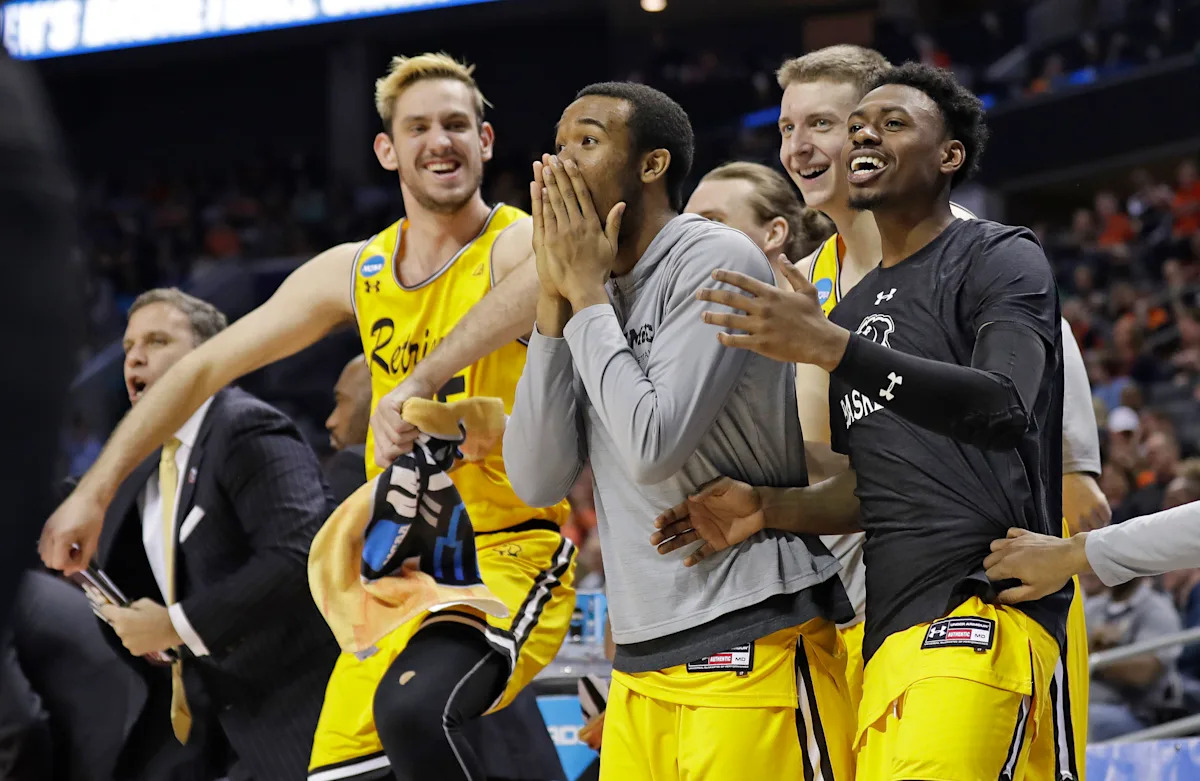
UMBC's Historic Upset: A 16-Seed Shakes the NCAA Tournament Foundation
The NCAA Men's Basketball Entry is renowned for its heart-stopping upsets, the dramatic narratives of underdogs conquering giants, and the sheer unpredictability that has earned it the moniker "March Madness." Yet, even within a tournament celebrated for its shocks, one particular moment in 2018 stands out as arguably the most stunning in its storied history: the 16-seed UMBC Retrievers’ electrifying victory over the 1-seed Virginia Cavaliers. This wasn't just another upset; it was a groundbreaking event that shattered a long-standing statistical barrier and forever altered the perception of what’s possible in the NCAA Men's Basketball.
The Unthinkable Upset: UMBC Makes History
On March 16, 2018, the University of Maryland, Baltimore County (UMBC) stepped onto the court in Charlotte, North Carolina, as monumental underdogs. Their opponent, the Virginia Cavaliers, entered the 2018 NCAA Division I men's basketball tournament not just as a No. 1 seed, but as the overall top seed in the entire 68-team field. Virginia boasted an intimidating 31-2 record, a stifling defense, and was widely considered a strong contender for the national championship. History, too, was against UMBC. In the 79 previous editions of the men's basketball tournament, a 16-seed had *never* defeated a 1-seed. It was a statistical anomaly that had become a seemingly unbreakable curse.
The game began tentatively, with both teams feeling each other out. The first half saw a defensive struggle, typical of a Virginia game, ending in a rare 21-21 tie. But as the second half unfolded, something truly extraordinary happened. UMBC, fueled by an aggressive offense and an astonishing shooting performance, began to pull away. They didn't just win; they dominated. The final score of 74-54 wasn't just an upset; it was a resounding, 20-point rout that sent shockwaves through the sports world. The Retrievers showcased remarkable composure and execution, delivering a performance for the ages that transcended mere basketball—it became a testament to perseverance and the power of believing in the impossible. This monumental victory by UMBC forever etched their name into the annals of the NCAA men's basketball tournament, proving that in March, absolutely anything can happen.
Navigating the Path to the Tournament: Automatic Bids and Conference Championships
So, how does a school like UMBC, from the Patriot League, even get a shot at facing a Goliath like Virginia? The answer lies in the intricate system of qualifying for the NCAA Division I men's basketball tournament. The 68-team field is comprised of two types of entrants: automatic qualifiers and at-large selections.
- Automatic Bids: These are awarded to the winners of the 32 Division I conference tournaments. For mid-major conferences like the Patriot League, winning their postseason tournament is typically the only viable path to the Big Dance. The Patriot League men's basketball tournament, held at the conclusion of each regular season, exemplifies this: its winner is guaranteed an automatic bid. This system ensures that every conference, regardless of its national standing, has a direct route to college basketball's biggest stage, fostering incredible competition and giving smaller schools their moment in the spotlight.
- At-Large Selections: The remaining 36 spots are filled by teams selected by the NCAA Men's Division I Basketball Committee. These teams are chosen based on their regular-season performance, strength of schedule, and various statistical metrics. This is often the route for power conference teams that may not win their conference tournament but have strong résumés.
Consider the structure of a major conference tournament, such as the SEC men's basketball tournament. This single-elimination event involves all league schools, with seeding based on regular-season records. The winner receives the conference's automatic bid to the NCAA men's basketball tournament. While the official conference championship is awarded to the team with the best regular-season record, the tournament offers a dramatic do-or-die pathway to March Madness.
The SEC tournament format has evolved over time. For instance, since expanding to 14 schools with the arrival of Missouri and Texas A&M in 2012, a new format was implemented. The 2013 tournament was the first to feature opening-round games for the bottom four seeds (11 through 14), while the top four seeds received a "double-bye" directly into the quarterfinals. This structure ensures that top regular-season performers are rewarded while still providing an opportunity for every team to compete for the coveted automatic bid. These conference tournaments, whether from the Patriot League or the SEC, are pivotal arenas where dreams are forged and the first steps towards a national championship are taken. For a deeper dive into how these critical bids are determined, explore our article on the SEC Men's Basketball Tournament: Evolution of Bids and Byes.
Beyond the Shockwave: The 2018 Tournament's Lasting Legacy
The 2018 NCAA Division I men's basketball tournament, the 80th annual edition, was memorable for more than just UMBC's monumental upset. The Retrievers' victory set a tone for a tournament filled with unexpected turns. For the first time in tournament history, all four top-seeded teams in a single region—the South, where UMBC's stunning win occurred—failed to reach the Sweet 16. This unprecedented volatility underscored the growing parity in college basketball and the inherent danger of overlooking any opponent in a single-elimination format.
The tournament also delivered other compelling storylines, including the first regional final matchup of a 9-seed (Kansas State) and an 11-seed (Loyola–Chicago). Loyola-Chicago, a delightful Cinderella coached by Porter Moser and inspired by team chaplain Sister Jean, captured the nation's hearts with their improbable run to the Final Four. While UMBC's journey ended in the next round, their impact resonated throughout the bracket, demonstrating that early upsets can create a ripple effect, opening pathways for other dark horses to make their own deep runs.
Ultimately, the 2018 championship game culminated with Villanova, a familiar powerhouse returning after their 2016 national championship, defeating Michigan, who made their first appearance since their runner-up finish in 2013. Kansas was also a strong contender, highlighting that despite the early chaos, elite programs often find a way to navigate the bracket. The 2018 tournament, concluding at the Alamodome in San Antonio, Texas, remains a vivid example of the tournament's dual nature: capable of producing both historic upsets and reaffirming the strength of top-tier programs.
Practical Tips for Enjoying the Men's Basketball Tournament
The drama of the NCAA men's basketball tournament offers endless enjoyment for casual fans and die-hards alike. Here are a few tips to enhance your experience:
- Embrace the Underdogs: Don't just pick the top seeds. Research teams from smaller conferences. Look for strong offensive or defensive metrics, experienced rosters, or teams coming off a hot streak in their conference tournaments. UMBC proved that seed numbers are just numbers once the ball is tipped.
- Study the Matchups: A "bad" matchup can be more dangerous than a "lower" seed. A top-ranked team that struggles against specific styles of play (e.g., tenacious zone defense, fast-paced transition offense) might be vulnerable to an upset, even if their opponent isn't highly seeded.
- Follow the Narratives: Beyond the scores, the tournament is rich with human interest stories. Following the journeys of coaches, players, and teams adds an emotional depth that makes every game more compelling. These narratives, like UMBC's Cinderella run, are what make the tournament so special.
- Don't Overthink Your Bracket (Too Much): While research is good, the tournament is inherently unpredictable. Sometimes, going with your gut feeling or a sentimental pick for an upset can be just as effective as hours of statistical analysis. The beauty of March Madness lies in its chaos.
UMBC's historic triumph over Virginia in the 2018 NCAA men's basketball tournament was more than just a single game; it was a watershed moment that redefined the boundaries of possibility within college sports. It solidified the notion that in March Madness, every team, no matter its seeding, carries the potential to make history. This enduring spirit of unpredictability, combined with the fierce competition for automatic bids through conference tournaments, continues to make the NCAA men's basketball tournament one of the most beloved and captivating events on the global sporting calendar.